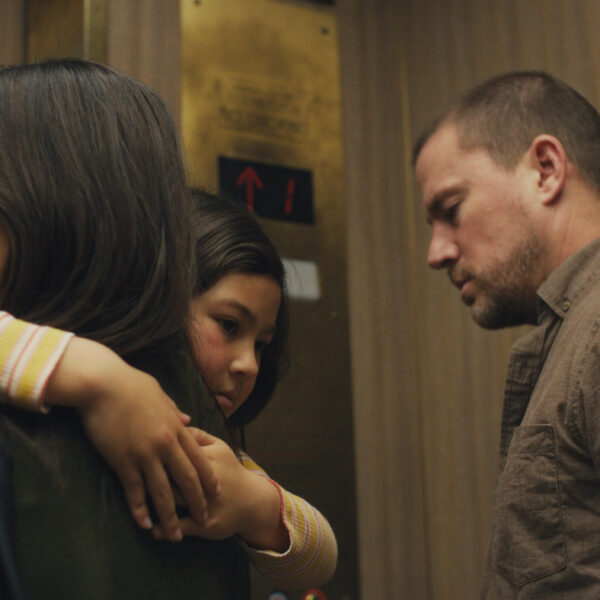

In the autumn of 1989, Scottish actor Ian Charleson was presented with an opportunity that most actors could only dream of. Daniel Day-Lewis had abruptly abandoned a production of Hamlet at London’s National Theatre, leaving director Richard Eyre scrambling to find a replacement capable of taking on one of the most demanding roles in all of theatre. Charleson, who had already enjoyed considerable success on stage and screen, including memorable performances in Chariots of Fire and Gandhi, was offered the part. There was, however, one rather significant complication: the actor was dying of AIDS, and his rapidly deteriorating health made the prospect of undertaking such an extraordinarily demanding role seem almost impossible.
Charleson accepted anyway.
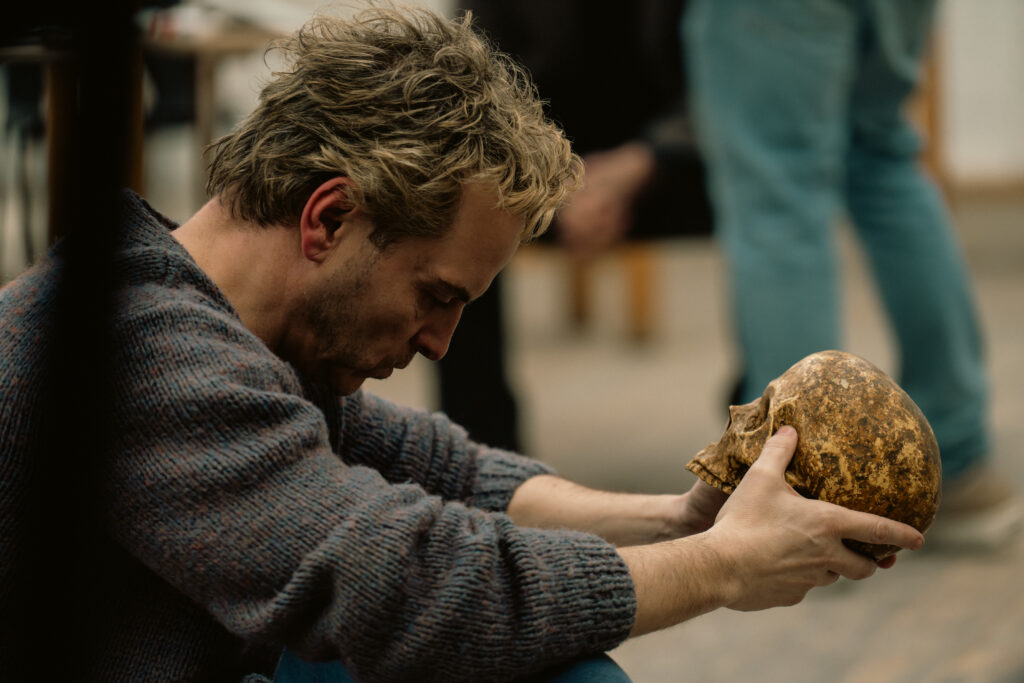
What followed was one of the most remarkable performances in British theatrical history, with Charleson delivering a portrayal of Shakespeare’s troubled Danish prince that would earn widespread acclaim from audiences and critics alike. Despite his increasingly fragile physical condition, the actor continued performing until November 13, 1989, just eight weeks before his death at the age of 40. Among those who witnessed his final performance was Ian McKellen, who was so overwhelmed by what he’d seen that he publicly declared Charleson the year’s finest actor, dedicating his own Evening Standard Theatre Award to him the following evening.
It’s an extraordinary story, and one that forms the basis of Simon Stone’s Elsinore, a wonderfully funny, profoundly moving and beautifully acted drama that chronicles the final months of Charleson’s life, his determination to return to the stage and the friendships that sustained him through one of the most difficult periods imaginable.
Andrew Scott is nothing short of phenomenal as Charleson, delivering an incredibly sensitive, frequently heartbreaking performance that ranks among the finest of his already remarkable career. But what makes his portrayal so effective is his refusal to define Charleson solely through his illness. He’s charming, funny, occasionally difficult and wonderfully mischievous, a man whose love for acting is matched only by his affection for the people around him. Even as his health begins to deteriorate, Charleson’s enthusiasm for his work remains infectious, and Scott captures that determination with an extraordinary amount of warmth and humanity.
Written by Stephen Beresford, whose previous credits include the wonderful 2014 comedy-drama Pride, Elsinore is also something of a love letter to the theatre itself, offering a fascinating glimpse into the world of British acting during the late 1980s. There are rehearsals, backstage arguments, difficult artistic decisions and moments of genuine hilarity, with Stone taking enormous pleasure in exploring the peculiar personalities and relationships that make up a theatrical production.
Johnny Flynn is excellent as Richard Eyre, the director who takes a considerable risk in casting Charleson despite knowing about his illness, while Olivia Colman delivers a typically wonderful performance as Dr. Margaret Johnson, the physician responsible for his care. Elsewhere, David Dawson is particularly affecting as filmmaker Derek Jarman, whose own experiences of living with HIV inform his increasingly complicated relationship with Charleson, and Peter Mullan brings considerable emotional weight to the role of his father.
But it’s Billie Piper, playing Charleson’s close friend and casting director Patsy Pollock, who provides much of the film’s humor and warmth. Piper is absolutely wonderful in the role, bringing an irresistible energy to a character whose unwavering affection for Charleson is evident in practically every interaction they share. Patsy is outspoken, funny and occasionally rather overbearing, but beneath her seemingly endless enthusiasm is a woman who understands the enormity of what her friend is going through and is determined to help him make the most of whatever time he has left.
Their relationship is among the film’s greatest strengths, particularly because Stone and Beresford understand that even the most devoted friendships aren’t necessarily defined by grand declarations of love or endless conversations about mortality. Sometimes it’s simply about showing up, having a laugh, sharing a drink or reminding someone that the world hasn’t stopped turning simply because their circumstances have changed.
And for all the sadness that inevitably accompanies Charleson’s story, Elsinore is surprisingly full of life. There are moments of outrageous humor, considerable warmth and an infectious appreciation for the friendships, creative ambitions and seemingly ordinary experiences that make life worth living. It’s an especially impressive achievement considering the film’s subject matter, with Stone striking a delicate balance between celebrating Charleson’s extraordinary spirit and acknowledging the devastating realities of the AIDS crisis, a period in which an entire generation of queer men were forced to confront not only the prospect of premature death but also the ignorance, prejudice and indifference of the society around them.

For Piper, the experience of making and subsequently watching the film proved unexpectedly personal, prompting her to reconsider some rather fundamental aspects of her own life.
“The importance of friendship was a big takeaway for me,” she says.
But it wasn’t simply the film’s portrayal of Charleson’s relationships that affected her. Watching the finished film also left Piper questioning whether she was making the most of her own life, an experience that stayed with her long after the screening had ended.
“As soon as I left the screening room, I was having that word with myself immediately, like, ‘Do I really wanna live this way?'” she recalls.
They’re the sort of questions that a particularly affecting piece of cinema can occasionally inspire, although Piper acknowledges that it’s relatively rare for a film to leave such a lasting impression. Most of the time, she explains, audiences leave the cinema having enjoyed or disliked what they’ve seen before quickly returning to their everyday lives. Elsinore, however, affected her rather differently.
“I sort of walked out just feeling so curious about the rest of my life,” she says.
It’s an especially lovely observation, and one that speaks to the film’s greatest achievement. Although audiences are well aware of Charleson’s fate from the outset, knowing that his life is coming to an end doesn’t diminish the enormous pleasure that comes from watching him live it. In fact, some of the film’s most memorable moments have relatively little to do with his illness, instead focusing on his relationships, his mischievous sense of humor and the extraordinary excitement he feels at being given the opportunity to play a character he’s spent much of his career hoping to revisit.

That excitement is something Scott understands particularly well, having played Hamlet himself in Robert Icke’s acclaimed 2017 production at London’s Almeida Theatre, a performance that earned him widespread praise and further established his reputation as one of the most gifted stage actors of his generation.
But while Scott was already intimately familiar with Shakespeare’s tragedy, portraying Charleson presented him with an entirely different challenge. Rather than simply returning to a character he’d played before, he was now attempting to understand what that character might have meant to another actor who was confronting his own mortality while performing it.
When asked what it was like to revisit Hamlet through Charleson’s experiences, Scott admits that the process was challenging, particularly because his own understanding of the play has changed considerably in the years since he last performed it.
“It’s extraordinary language,” he says. “When I played Hamlet, I maybe hadn’t experienced as much grief as I do now.”
Scott lost his mother, Nora, in March 2024, seven years after his acclaimed portrayal of Hamlet at London’s Almeida Theatre. The actor has spoken openly about the enormous impact her death has had on him, and has credited that experience with helping fuel his determination to bring Charleson’s story to the screen. Returning to Shakespeare’s tragedy, particularly one so concerned with grief and mortality, was therefore an especially personal experience for Scott.
“It was wonderful to be able to revisit that incredible language with that in mind,” he explains.
And while Scott’s own experiences inevitably informed his understanding of the material, he was also fascinated by the question of what Charleson himself might have been feeling as he prepared to perform one of theatre’s most physically and emotionally demanding roles while knowing that his life was coming to an end.
“Just to imagine what Ian might have been feeling when he was so near death,” Scott says, reflecting on the extraordinary circumstances surrounding Charleson’s final performances.
There’s something almost unbearably moving about the idea of an actor performing Hamlet while confronting the very questions of life and death that have made Shakespeare’s tragedy such an enduring work of literature. The play’s preoccupation with mortality, grief and the uncertainty of existence takes on an entirely different significance when performed by someone who knows that his own death is approaching, and the knowledge of Charleson’s circumstances makes Scott’s recreation of those performances particularly affecting.
One of the film’s most remarkable achievements is the way Stone allows the audience to experience the enormous physical and emotional demands of the role, with Scott delivering an astonishing performance that captures both Charleson’s determination and the increasingly visible toll that performing is taking on his body. There’s an extraordinary vulnerability to his work, particularly as the distinction between Charleson’s personal experiences and the emotions he’s attempting to communicate through Shakespeare’s words begins to feel almost impossibly small.
Scott is equally fascinating when discussing the technical challenges of recreating a theatrical performance for the screen. Having previously played Hamlet in front of live audiences, he was acutely aware of the differences between performing Shakespeare in a theatre and portraying someone performing Shakespeare in a film, particularly when it came to the delivery of the dialogue.
“To do it on celluloid is really a sort of different challenge about how you speak the lines,” he explains, “because you’re not concerned as much with reaching the back of the house of a 2,000-seat auditorium.”
It’s an important distinction, particularly for a film that spends so much of its runtime moving between the intimacy of Charleson’s personal life and the considerably more theatrical environment of the National Theatre. While the original production required Charleson to project his voice across an enormous auditorium, Scott’s performance allows for a greater degree of subtlety, with Stone’s camera capturing expressions and gestures that might have been impossible to appreciate from the back of a theatre.
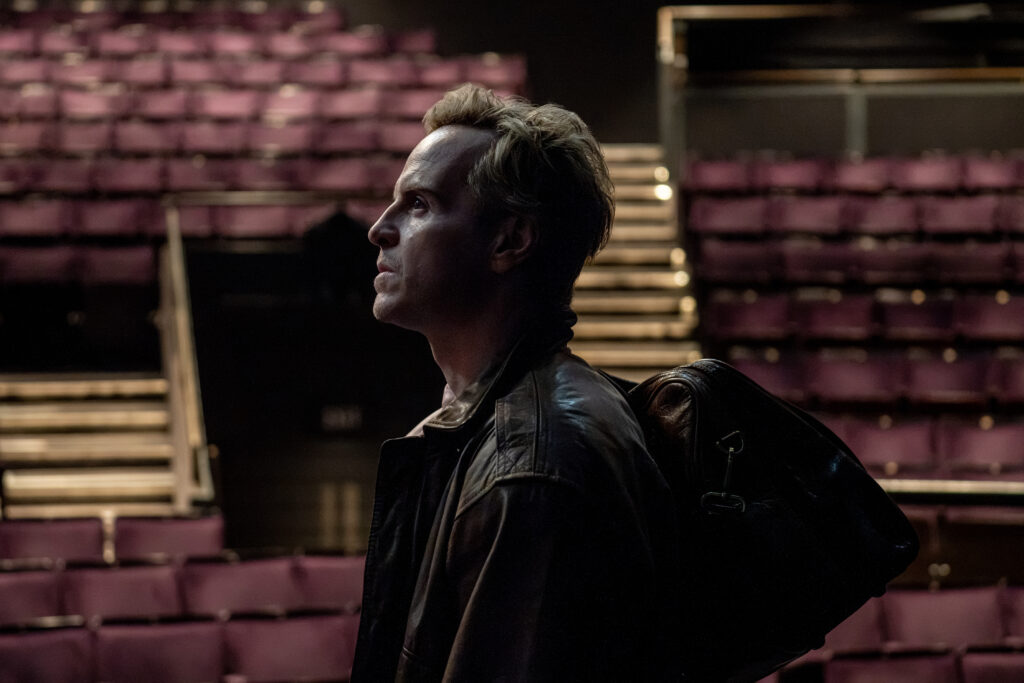
The result is an unusually intimate interpretation of Hamlet, with Scott bringing an almost conversational quality to some of Shakespeare’s most recognizable passages. Even when performing in front of a packed auditorium, there’s a sensitivity to his portrayal that allows audiences to appreciate the personal significance of the words Charleson is speaking.
It’s also a fascinating reflection of the actual performances that inspired the film. In a tribute published following Charleson’s death, McKellen recalled being struck by the actor’s ability to deliver Shakespeare’s soliloquies with remarkable intimacy, transforming the vast auditorium of the National Theatre into something considerably more personal. Despite his weakened physical condition, Charleson had managed to give a performance that was both extraordinarily accomplished and deeply affecting, with his awareness of his own mortality seemingly informing every aspect of his interpretation.
For Scott, the prospect of returning to Hamlet was something he hadn’t anticipated, particularly given just how exhausting he’d found the experience the first time around.
“It was wonderful and a complete surprise that I would get to revisit that part,” he says. “I thought I was done with that because it’s so exhausting.”
That exhaustion, however, only made Charleson’s achievement all the more extraordinary. Having experienced the physical and emotional demands of performing Shakespeare’s tragedy himself, Scott was acutely aware of the enormous effort required to sustain such a performance over an extended run.
And the fact that Charleson managed to do so while seriously ill remains almost impossible for him to comprehend.
“The fact that he did it when he had virtually no immune system is mind-blowing,” Scott says. “It really is.”

Charleson died on January 6, 1990, having requested that the cause of his death be made public, a remarkably courageous decision during a period when the stigma surrounding HIV and AIDS was still overwhelming. His final performances would go on to become an essential part of British theatrical history, and his legacy continues to be celebrated through the Ian Charleson Awards, established in his memory to recognize outstanding classical performances by young actors.
But Elsinore is interested in considerably more than preserving the memory of an extraordinary performer. It’s also a film about the people who surrounded him, the friendships that helped him navigate an unimaginably difficult period and the importance of finding joy even when the circumstances of one’s life seem almost impossibly bleak.
For Piper, that combination of humor, heartbreak and an overwhelming appreciation for life is precisely what makes the film so special.
“I guess that is the power of a great piece of cinema,” she says. “That’s how I long to feel coming out of the cinema or coming out of the theatre. It doesn’t happen that often.”
And while the experience of watching Elsinore may have been an unusually emotional one, its effects have stayed with her in ways she hadn’t necessarily anticipated.
“It raised a lot of very important questions for me,” Piper explains, “and things that I’m still sort of carrying.”
ELSINORE is now playing in select US theaters, with an expanded theatrical rollout continuing through December 2026.