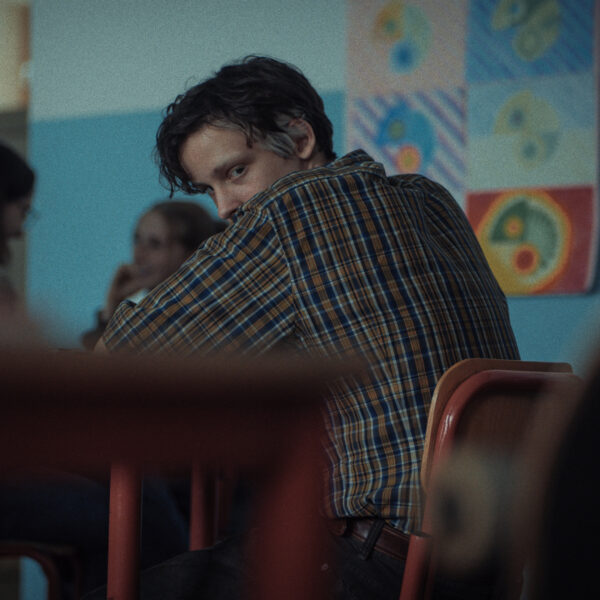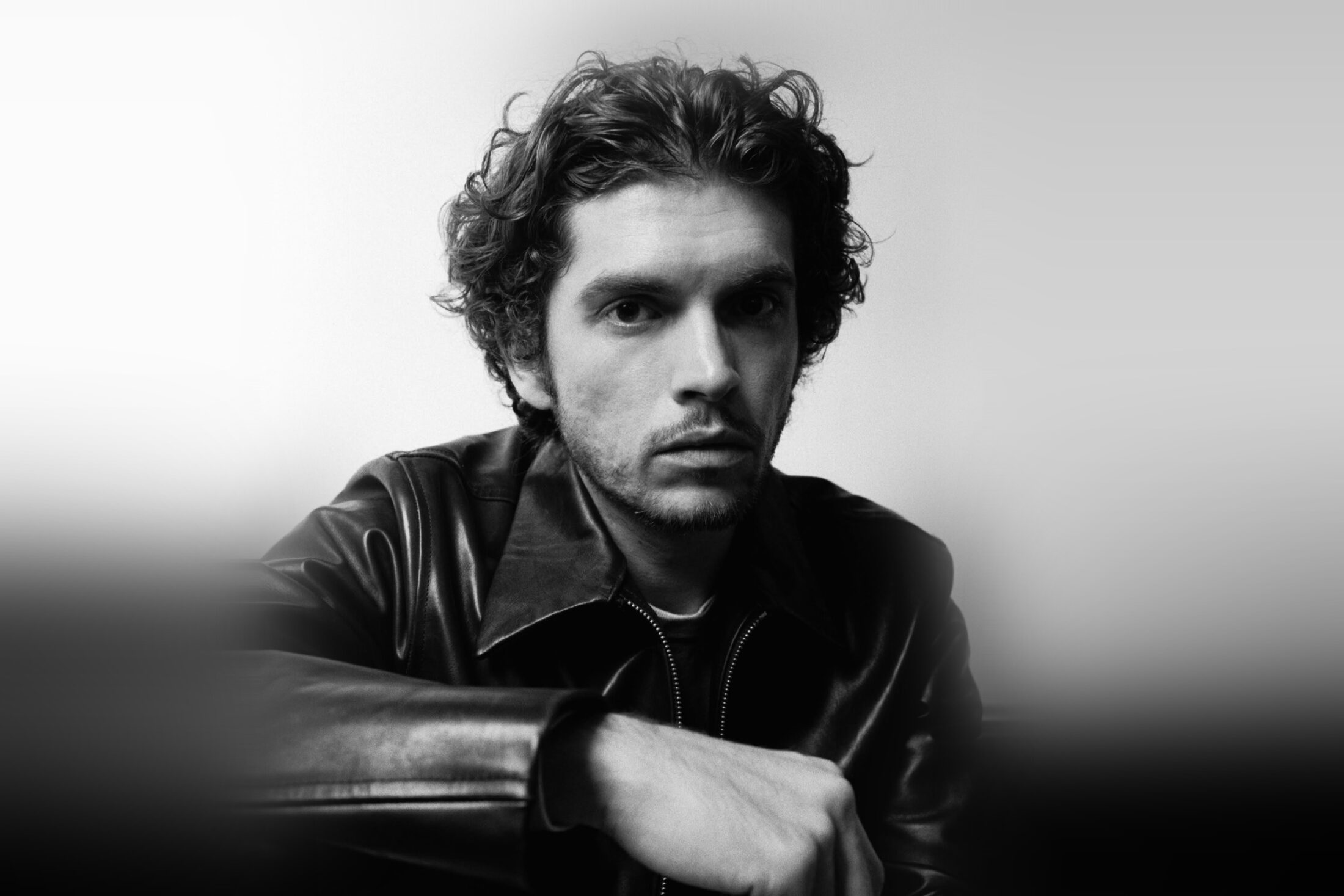

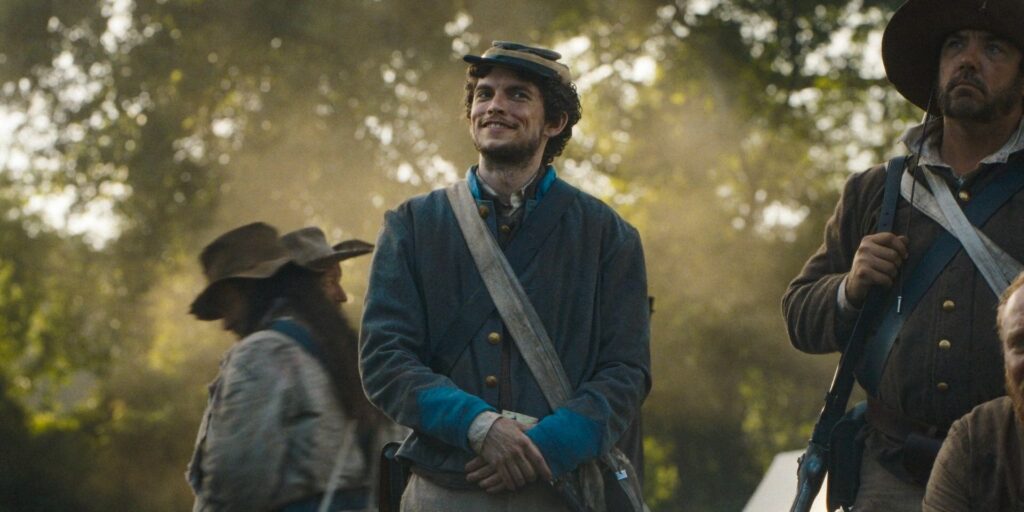
Kimball Farley was sitting in a cooling van in Charleston, South Carolina, dressed in an incredibly uncomfortable Confederate soldier’s uniform, when he caught his first glimpse of Bradley Cooper. It was a particularly hot day in June, and Farley, who was preparing to film his scenes for the fourth and final season of HBO’s The Righteous Gemstones, had been trying to escape the heat while waiting to be called to set. Then, seemingly out of nowhere, Cooper appeared, covered in mud and dressed in his own Civil War-era costume.
“He was fully dirty in mud and everything, but he’s got these piercing blue eyes,” Farley recalls, laughing at the memory. “And I was like, ‘Oh, he’s a real guy.’ Obviously he’s a real guy, but when you meet some of these people in person, you’re like, ‘Oh, he’s a guy.'”
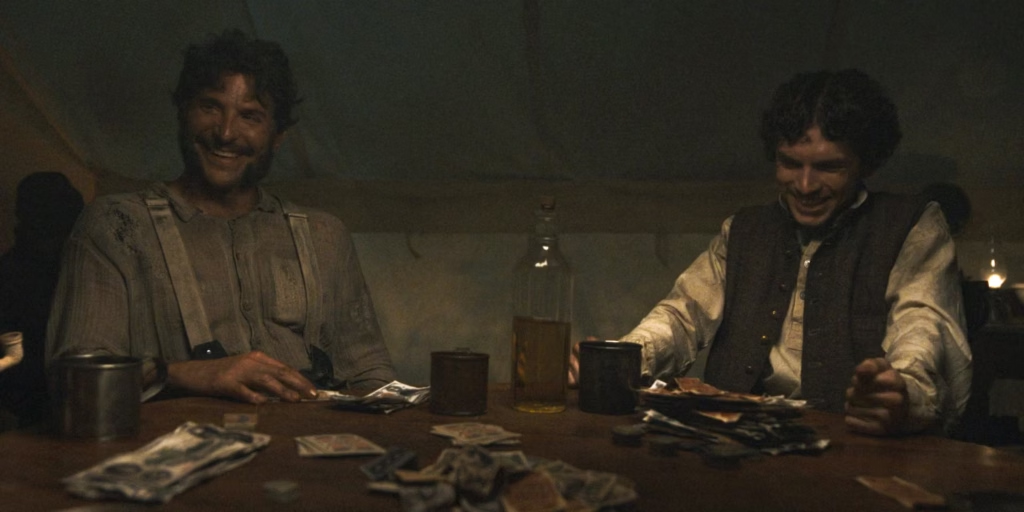
Things only became more surreal when Danny McBride, the creator and star of The Righteous Gemstones, emerged from a nearby bush to introduce himself. McBride, who also directed the episode, was immediately welcoming, telling Farley how much he’d enjoyed his audition before taking him over to meet Cooper. For a young actor who had spent much of his career working on independent productions with considerably smaller budgets, it was almost too much to process.
“I just couldn’t help myself,” he admits. “They probably were like, ‘Who is this guy?’ I was like, ‘You’re a god. You’re a god. I just have to say that to both of you.'”
Farley can laugh about the experience now, but at the time, working alongside two actors he’d spent years admiring was an enormous milestone. Appearing as Ned Rollins in “Prelude,” the critically acclaimed opening episode of the show’s final season, Farley found himself transported to the American Civil War, playing a Confederate soldier opposite Cooper’s Elijah Gemstone in an ambitious, feature-length origin story that bears little resemblance to the contemporary setting audiences had come to associate with McBride’s outrageous comedy.
“It was the biggest pinch-me moment,” he says. “That was my first foray into doing something on such a large scale, because I had come from the indie film world, and in the indie film world, most of the time your budget’s max is like $300,000 or something. And so this was a jump to a $20 million episode of television.”
The scale of the production was certainly impressive, with Farley comparing the enormous sets to something out of Kevin Costner’s Dances with Wolves, but it was the opportunity to work with Cooper and McBride that left the greatest impression.
“You’re wrestling with Bradley Cooper every day and you’re being directed by Danny,” he says. “It was a crazy, crazy jump, but it was amazing.”
It’s a rather fitting experience for an actor whose fascination with cinema began with an equally memorable performance by another Hollywood star. Long before Farley found himself sharing scenes with Cooper, he was a young boy watching Christopher Nolan’s The Dark Knight, completely transfixed by Heath Ledger’s portrayal of the Joker. The film, which he first encountered when he was around ten years old, was unlike anything he’d seen before, both in terms of its subject matter and the extraordinary transformation Ledger underwent to play its iconic villain.
“That was the first time I felt like I saw an actual performance,” Farley explains. “It was probably, at the time, the darkest and edgiest thing I had ever seen.”
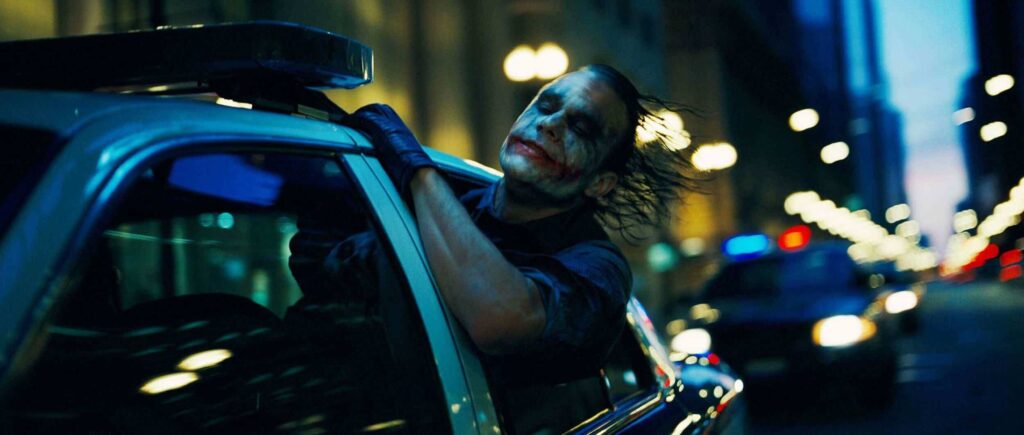
Initially forbidden from watching the film, Farley remembers catching glimpses of Ledger’s performance and becoming fascinated by how completely the actor seemed to disappear into the character. Even today, he admits that he occasionally revisits the film in an attempt to identify traces of Ledger beneath the makeup and mannerisms, studying his facial expressions and comparing them with interviews in the hope of finding something recognizable.
“I’ll try to neurotically watch the film and I’ll try to look for, ‘Where is Heath? Where is Heath?’ Is that his smile? Is that something he does with his eyes in an interview or something?” he says. “And it’s very hard to find him.”
That ability to disappear into a character became something of an obsession for Farley, who credits Ledger’s performance with inspiring him to pursue acting in the first place.
“That was probably the first time I was like, ‘That’s what I want to do,’ just seeing him do that.”
Farley’s admiration for Ledger extends beyond The Dark Knight, and he can’t help but wonder what the actor might have accomplished had his life not been tragically cut short in 2008. It’s a particularly interesting thought considering the filmmakers who have emerged in the years since, many of whom have built their reputations on precisely the kind of unconventional, psychologically demanding material that Ledger seemed increasingly interested in exploring.
“Imagine him in a Robert Eggers movie or something,” Farley suggests. “A real legend.”
Ledger was hardly his only influence. Growing up, Farley became fascinated by actors who seemed capable of transforming themselves completely from one role to the next, citing Johnny Depp as another early inspiration before eventually discovering the work of Daniel Day-Lewis, Montgomery Clift, Jack Nicholson and Philip Seymour Hoffman.
“Probably my Mount Rushmore is Daniel Day-Lewis, Montgomery Clift, Jack Nicholson, Philip Seymour Hoffman,” he says. “If I could just touch what they’ve done in all their performances, that’s probably every actor’s dream.”
It’s an impressive collection of influences, although one that makes considerably more sense when considering the characters Farley has gravitated towards throughout his own career. Whether he’s playing the profoundly disturbed titular character in Mark H. Rapaport’s Hippo or the seemingly innocent Secondborn in the filmmaker’s equally bizarre follow-up Godhead, Farley has demonstrated a willingness to embrace difficult, often deeply unpleasant characters whose motivations and behavior aren’t always immediately understandable.
He’s also particularly drawn to the physical aspects of acting, admitting that he enjoys the process of looking in the mirror and seeing someone almost completely unrecognizable staring back at him.
“In a perfect world, I would love every character I play to be different and look entirely different,” he explains. “I almost never want to look the same. It helps me act more when I look in the mirror and I’m like, ‘Oh, I don’t recognize this person.'”
For all his admiration for actors known for their ability to disappear into their roles, however, Farley is quick to point out that physical transformation isn’t necessarily the most important aspect of a great performance. Nicholson, for instance, rarely undergoes the kind of dramatic transformations associated with Day-Lewis, but there’s an authenticity and unpredictability to his performances that makes them just as fascinating to study.
“It’s almost like the best film school you could have is watching these guys act, because each one of them can teach you different things,” Farley says.
Hoffman, meanwhile, taught him something rather different: the importance of enjoying the process itself.
“Something I’ve always admired about him is he always seems like he’s having fun with it,” he explains. “In every role, he seems like he’s having so much fun. And I feel like there’s a lot of actors, or me, sometimes you forget, ‘Oh, I can have fun. I don’t have to make this just hard.'”
It’s a lesson Farley has increasingly come to appreciate, particularly as he continues to develop his own approach to acting. Although he admires performers known for their intense preparation, he doesn’t subscribe to any one particular technique, preferring instead to adapt his approach according to the demands of each character.
Sometimes that means identifying aspects of a character that remind him of himself. In Henry Chaisson’s upcoming gothic horror film Recluse, for instance, Farley plays Todd, a nervous, rather peculiar young man whose personality bears certain similarities to his own.
Other characters require considerably more work, particularly when their personalities and circumstances are so far removed from Farley’s own experiences that finding a personal connection becomes difficult. In those instances, he often begins with something physical, whether it’s a distinctive mannerism, an unusual way of speaking or a particular aspect of the character’s appearance.
His performance in The Righteous Gemstones provides a particularly interesting example. While preparing to play Ned Rollins, Farley found himself thinking about Joaquin Phoenix’s extraordinary performance in Paul Thomas Anderson’s The Master, specifically the way Phoenix manipulates his jaw to create the unsettling physicality of Freddie Quell.
“I just felt like his jaw should be wired shut almost in a Joaquin Phoenix, The Master sort of way,” he explains.
So Farley began experimenting with a similarly restricted manner of speaking, eventually discovering that the physical adjustment helped him better understand the character.
“I just started talking like this, where it was like my jaw is shut, and I just felt like, ‘That’s the character,'” he recalls. “By having the jaw wired shut, I was like, ‘Oh, this is the guy.'”
It’s an approach that might sound unusual to someone unfamiliar with the more technical aspects of acting, but Farley sees it as another way of identifying the qualities that make a character unique. Not every role requires such an elaborate process, he admits, and sometimes the best thing an actor can do is simply show up and trust their instincts. But when he’s playing someone as far removed from himself as the characters in Hippo and Godhead, the opportunity to experiment is one of the things he enjoys most.
That appetite for experimentation is also what makes his creative partnership with filmmaker Mark H. Rapaport so interesting. The two first met several years ago and quickly discovered that they shared an appreciation for the same kinds of films, particularly those that were willing to push the boundaries of conventional storytelling and good taste.
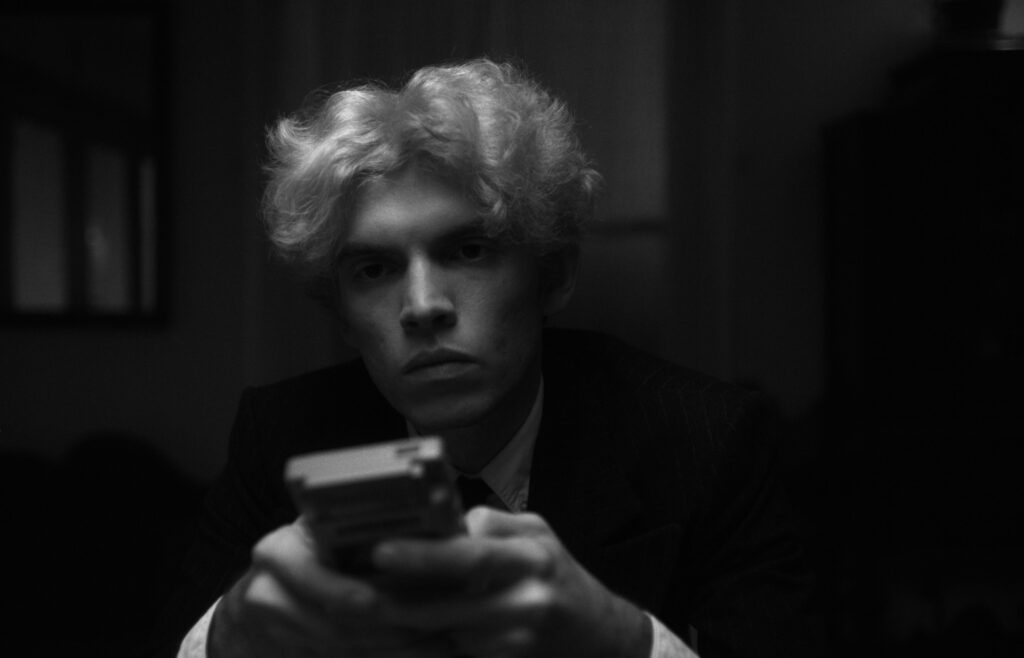
Their first feature-length collaboration, Hippo, premiered at the Fantasia International Film Festival in 2023 before receiving a limited theatrical release the following year. Shot in gorgeous black and white, the film is a wonderfully strange, frequently hilarious and increasingly disturbing coming-of-age story about two step-siblings living in a dysfunctional American household in the late 1990s. Farley plays the titular character, a socially maladjusted teenager obsessed with video games and violence, while Lilla Kizlinger portrays Buttercup, his Hungarian Catholic stepsister whose understanding of the world is informed by an unusual combination of religious devotion and sexual curiosity.
It’s the sort of film that almost defies conventional categorization, combining the awkward suburban humor of Napoleon Dynamite with considerably darker, more transgressive material. Farley is wonderfully unsettling in the leading role, sporting bleached hair and delivering a performance that is equal parts ridiculous, pathetic and genuinely frightening.
And, as it turns out, the character originated from two rather straightforward ideas: Farley wanted to play a sociopath, and he wanted to bleach his hair.
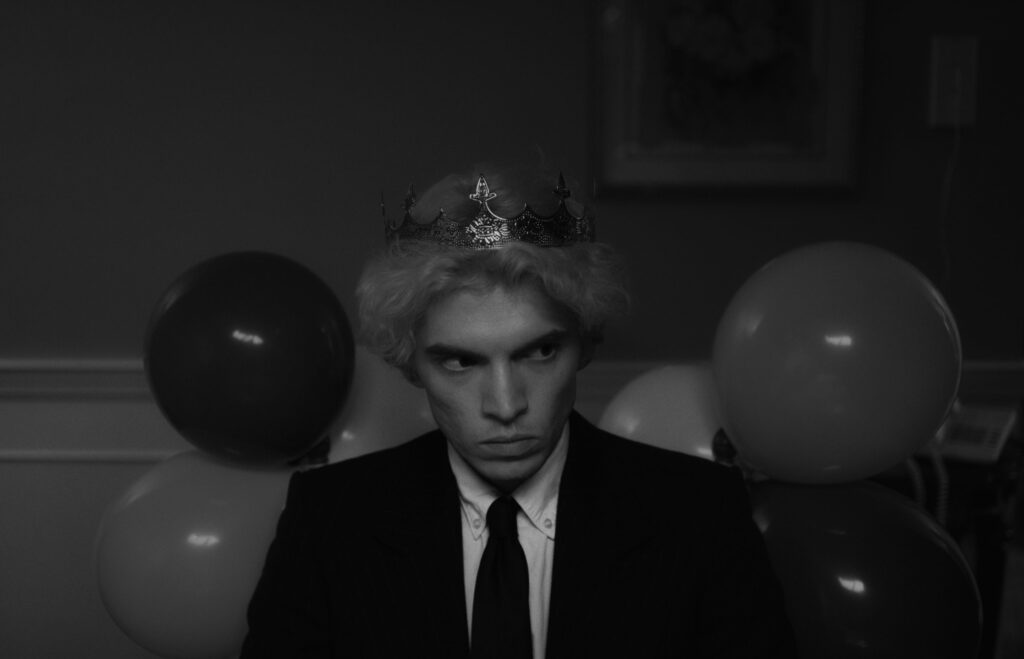
“For Hippo, it was like, ‘Oh, I’ve always wanted to play a sociopath,'” he recalls. “And me thinking from the outside in, and looking different, I was like, ‘I’ve also always wanted to have bleached hair in a movie.'”
The two ideas eventually became the foundation for a screenplay that Farley and Rapaport developed together, with the actor approaching the writing process as an extension of his work as a performer.
Writing, he explains, wasn’t something he’d originally intended to pursue as a separate career. Instead, it emerged from his desire to act, particularly during the early stages of his career when opportunities were considerably harder to come by.
“It started as a necessity,” he says. “Especially before I had done anything, you’re like, ‘I just want to act more than anything.’ And so you’re writing stories that you’re like, ‘Oh, I could act in this.'”
Meeting Rapaport gave him the opportunity to develop that interest into something more substantial, with the two quickly becoming close friends and discovering that their shared cinematic tastes made them particularly compatible collaborators.
“We just immediately hit it off and became best friends,” Farley recalls. “We discovered we have all the same favorite movies. We were like, ‘We should write something together.'”
Their approach to writing is especially interesting because of how closely it’s connected to Farley’s acting process. Rather than simply developing a screenplay and then figuring out how to portray the character once filming begins, Farley is able to explore the character’s personality, motivations and behavior throughout the writing process, often responding to questions from Rapaport about how he believes the character would react in a particular situation.
“You kind of get to live with the character longer because you’re almost already playing him while you’re writing,” he explains. “You’re like, ‘Well, I think I would do this here and this here.’ So in a way, it’s a really lovely acting exercise.”
The result is a collaboration that has already produced two of the more unusual independent films of the past few years, with both Hippo and Godhead demonstrating a remarkable willingness to explore uncomfortable subject matter without feeling the need to make their characters particularly likable.
For Farley, that fascination with darker, more transgressive material can be traced back to his childhood. Raised in a deeply religious household, he remembers becoming increasingly interested in stories that challenged his understanding of the world, eventually gravitating towards films that explored subjects he might once have considered forbidden.
“I grew up in a very religious household, and I’m not religious anymore,” he explains. “I consider myself agnostic or whatever. I just care about movies. That’s kind of my religion at this point.”
Farley is careful to emphasize that he has a loving relationship with his family, but he believes his upbringing played a significant role in shaping his artistic interests. Having grown up surrounded by religion, he found himself drawn to filmmakers who were willing to confront difficult questions about faith, morality and human behavior, often through stories that were deliberately provocative or unsettling.
“Growing up in a religious household almost makes you seek out taboo, weird things a little bit more,” he says.
He cites Lars von Trier as one of the filmmakers whose work has particularly appealed to him, with films such as Antichrist representing the sort of uncompromising storytelling that he finds so exciting. There’s something about cinema that refuses to offer easy answers, he believes, that makes the experience of watching it considerably more rewarding.
“Almost good art, I feel like, should feel like some kind of shout,” Farley explains. “The loudest and weirdest pieces of art are often the loudest just because they’re so weird.”
It’s a sentiment that helps explain why his collaborations with Rapaport have been so consistently unconventional. Rather than attempting to appeal to the broadest possible audience, the two seem genuinely excited by the prospect of making something that might leave viewers feeling disturbed, confused or even offended.
For Farley, that discomfort can be an important part of the experience.
“The taboo and weirder and darker things began to feel very comforting to me,” he says. “This is kind of the sandbox I want to play in.”
That interest in religion and the sometimes destructive consequences of unquestioning devotion is particularly evident in Godhead, Rapaport’s second feature, which made its world premiere at the 2026 Fantasia International Film Festival.
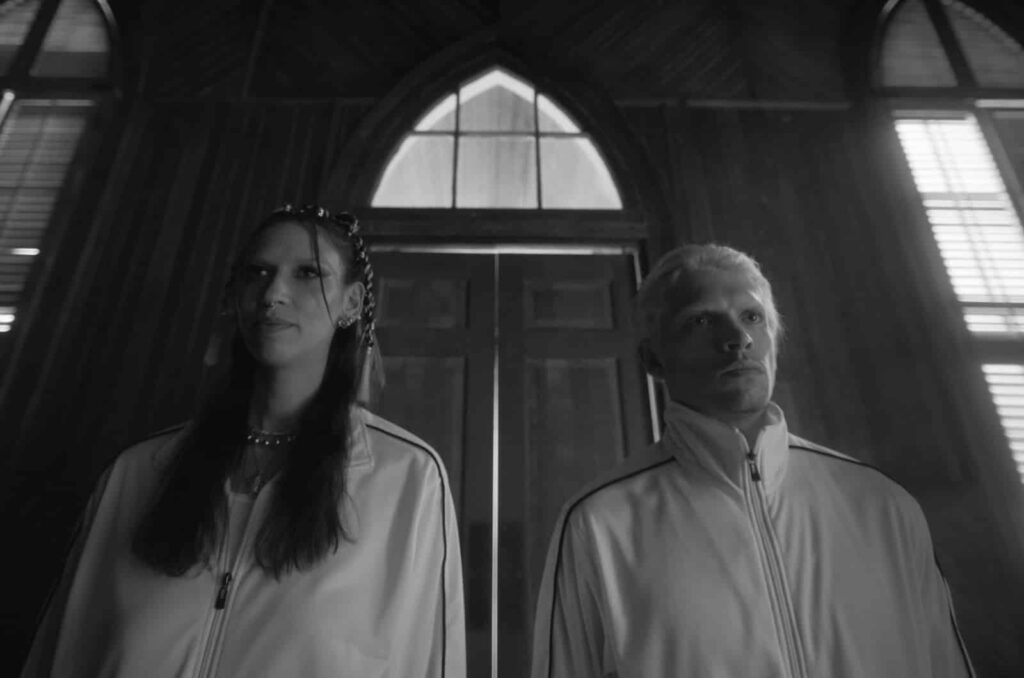
Shot in black and white, the psychological horror film follows a reclusive priest, played by Al Warren, whose quiet existence is disrupted by the arrival of two eccentric siblings calling themselves Firstborn and Secondborn. Portrayed by Sarah Coffey and Farley, respectively, the siblings claim that one of them is the physical embodiment of the Holy Spirit and demand that the priest determine which of them is telling the truth. What follows is a deeply unsettling examination of religious fanaticism, manipulation and the devastating consequences of allowing one’s beliefs to dictate the lives of others.
The film’s premise is outrageous, but Rapaport approaches the material with an impressive amount of restraint, confining much of the action to a handful of characters and allowing the increasingly volatile relationships between them to provide the tension.
Farley, who shares a story credit with Rapaport, reveals that the origins of the film can be traced back to their fascination with religious extremism. The two had come across a disturbing real-life story involving a group of brothers whose fanatical beliefs allegedly led them to commit acts of violence, although Farley admits that he can no longer remember the precise details.
What interested them wasn’t necessarily the incident itself, but the questions it raised about the extraordinary lengths people might go to when they believe they’re acting in accordance with a higher power.
“How far would you go for something you believe in, especially if it’s something you can’t physically see?” he asks. “How far are you willing to go for something? It’s all belief. You don’t know for certain what’s happening. You don’t know for certain what’s out there.”
Religion had already been a recurring interest in their work, with Hippo exploring the influence of Catholicism on Buttercup’s understanding of sexuality and morality. The filmmakers had also developed another screenplay, a considerably larger-scale project involving a cosmic cult, which Farley says they’re still hoping to make.
“It’s become our white whale,” he laughs. “It’s harder, but we’re going to harpoon it at some point.”
With Godhead, however, the pair found an opportunity to explore similar ideas on a smaller scale, creating what Farley describes as a Hitchcockian pressure cooker in which a handful of characters are forced to confront their own convictions and prejudices.
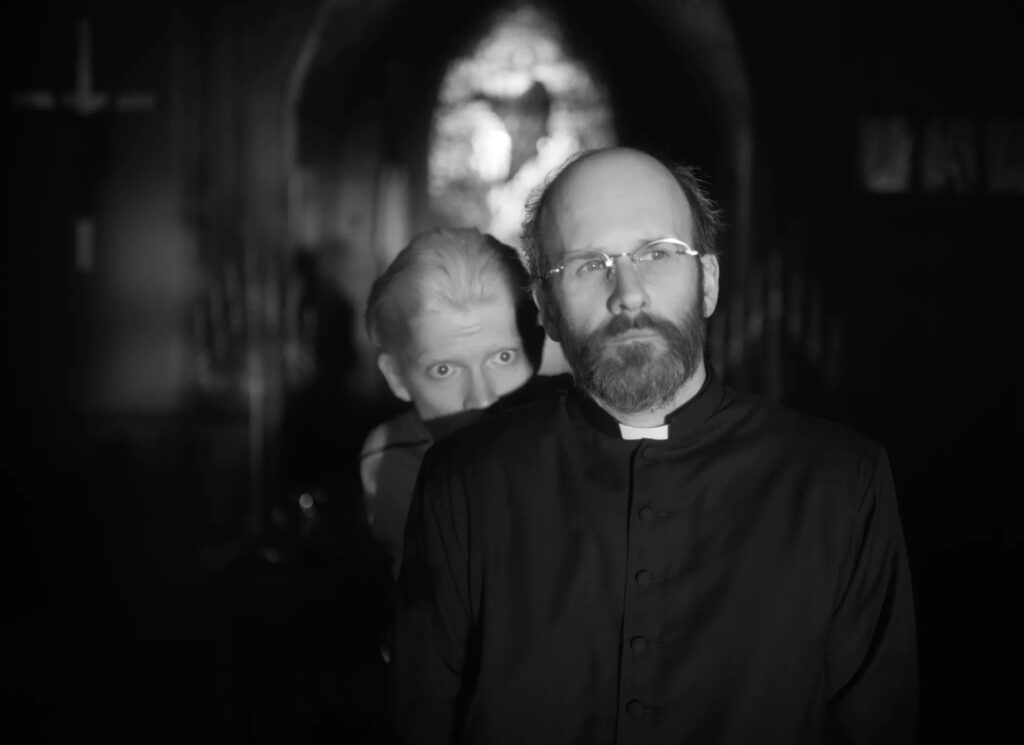
“You have four actors, you have a gun, you have two fanatic, crazy people, you have a priest that’s not the best priest,” he explains. “And seeing how these things intertwine, who’s right, who’s wrong.”
Of all the film’s characters, Secondborn is arguably the most interesting, not least because he’s considerably more sympathetic than his increasingly disturbing behavior might initially suggest. While his sister appears completely convinced of their divine mission, Secondborn is a much more hesitant figure, whose apparent devotion seems to stem less from genuine conviction than from his inability to imagine a life outside the one he’s always known.
Farley delivers a wonderfully peculiar performance, capturing the character’s childlike vulnerability without completely obscuring the more unsettling aspects of his personality. There’s an uncertainty to Secondborn that becomes increasingly apparent as the film progresses, particularly when he begins to question whether his sister’s beliefs are genuinely his own.
For Farley, Secondborn’s journey is closely connected to the experiences of people who grow up within strict religious environments, particularly those who are never given the opportunity to question the beliefs they’ve inherited.
“He’s immediately put in an environment where he can’t make a decision for himself,” Farley explains. “He’s kind of going along with everything his sister is saying.”
That lack of autonomy becomes particularly important as the film progresses and Secondborn begins to recognize that he might not actually want the future his sister has imagined for them.
“You kind of see him crack, and you kind of see, ‘Oh, we actually don’t know if he wants this or not. He might not want this, but he’s doing this because he’s being told to.'”
It’s an interpretation that makes Secondborn considerably more sympathetic than many of the characters surrounding him, especially when considering that the priest, who might initially appear to represent a more reasonable moral authority, is hardly without his own shortcomings.
“I see him in a way as the most human character,” Farley explains. “All these things are happening to him, and he’s not really being able to decide anything for himself.”
Farley is particularly interested in the idea that religious devotion can provide enormous comfort to some people while leaving others feeling trapped by beliefs they never consciously chose for themselves.
“Some people find real peace in that, but some people feel like they can’t really break free from that,” he says.
It’s an interesting perspective, and one that reflects the nuance Farley brings to Secondborn, who emerges as one of the film’s more unexpectedly affecting characters. Despite the increasingly bizarre circumstances surrounding him, there’s something almost painfully innocent about the way he approaches the world, with Farley portraying him as someone whose understanding of right and wrong has been shaped almost entirely by the people who’ve exercised control over his life.
“He felt like the most pure, sweet person because he was almost like a child himself,” Farley says.
With Hippo and Godhead now behind him, Farley is continuing to pursue similarly unconventional projects, including Recluse, the feature directorial debut of Antlers and Servant writer Henry Chaisson, which premiered at the Tribeca Film Festival earlier this year and is scheduled for a theatrical release in 2027.
The gothic horror film stars Sasha Frolova, Xander Berkeley, Toby Poser and Mia Vallet alongside Farley, and follows a woman whose return to her childhood home gradually exposes a series of disturbing family secrets. Farley is particularly enthusiastic about the project, not least because of his longstanding affection for gothic horror.
“I love gothic horror,” he says. “There’s something about the vibes in a gothic horror film that are just always so exciting to me.”
Unlike the deeply disturbed characters he’s played in Hippo and Godhead, Farley found himself relating to Todd in ways he hadn’t necessarily anticipated, particularly when it came to the character’s nervous disposition. “He’s a bit of a weird freak, which I guess I am as well,” he laughs. “He’s a fidgety, nervous guy, and I feel like I’m a fidgety, nervous guy.”