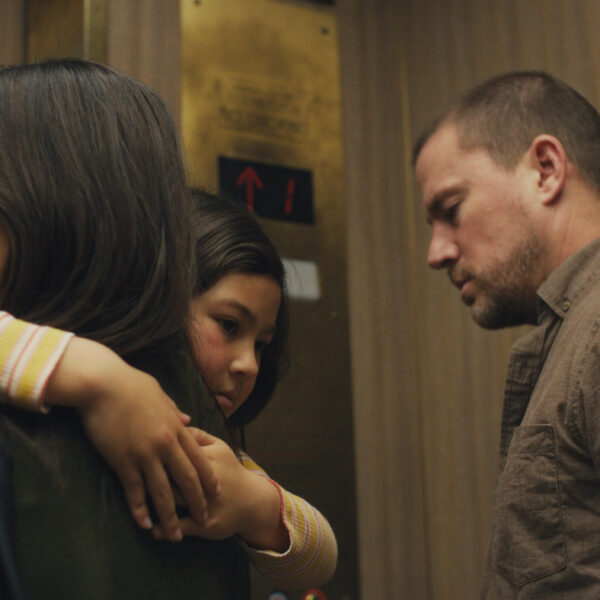

There’s something deeply unsettling about the way the residents of Remis embrace Matteo Corbin, the fifteen-year-old boy at the center of Paolo Strippoli’s extraordinary new horror film The Holy Boy. One by one, they approach him, wrap their arms around his body and hold him tightly, sometimes for considerably longer than he appears comfortable with. Some weep uncontrollably, while others seem almost overcome with relief. Matteo, meanwhile, simply stands there, allowing these strangers to embrace him without ever returning the gesture. It’s an unusual sight, particularly considering the enormous amount of affection these people supposedly have for the boy, but one that becomes increasingly disturbing as the film progresses and the true nature of their relationship begins to reveal itself.
For the residents of Remis, a picturesque Italian village surrounded by the imposing mountains of the Alps, Matteo is something of a miracle. Blessed with the extraordinary ability to absorb the emotional pain and suffering of others through physical contact, the teenager has become the object of an almost religious devotion, with the villagers gathering every week to embrace him in an elaborate ritual that allows them to rid themselves of whatever grief, guilt or sorrow they might be experiencing. The results are seemingly miraculous. Having endured their fair share of tragedy, the residents have managed to transform Remis into what is widely regarded as the happiest village in Italy, a place where everyone appears perpetually cheerful and the troubles of the outside world seem almost nonexistent.
But there’s a rather obvious problem with this arrangement, one that nobody in the village appears particularly concerned about: Matteo himself.
“An embrace is a very singular gesture,” says Strippoli, explaining the decision to make physical affection the mechanism through which the villagers transfer their suffering onto the boy. “We think of a hug as something that can make people safe and something comforting. But it can also be violence.”
“When you hug someone and the other person doesn’t want to be hugged, it’s like putting someone in a jail. The jail of your arms, the jail of your body.”
It’s a fascinating observation, and one that perfectly encapsulates the deeply disturbing premise of The Holy Boy, a wonderfully atmospheric, frequently horrifying and surprisingly moving exploration of religious devotion, grief, queer identity and the devastating consequences of forcing someone to become something they’re not.
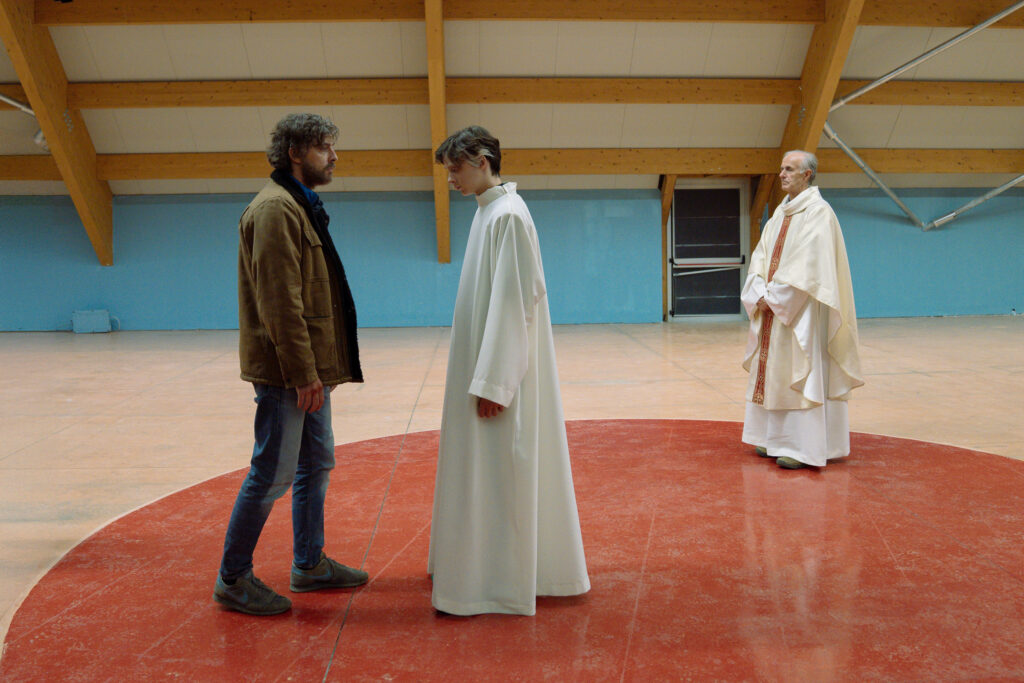
Originally titled La valle dei sorrisi (The Valley of Smiles), the film follows Sergio Rossetti (Michele Riondino), a former judoka and physical education teacher whose troubled past has left him emotionally detached from the world around him. Hoping to make a fresh start, he accepts a position in Remis, where he quickly becomes suspicious of the seemingly endless happiness exhibited by its residents. When he eventually discovers the secret behind the village’s collective contentment, Sergio becomes determined to rescue Matteo (Giulio Feltri) from the people who have spent years exploiting him, setting off a chain of increasingly disturbing events that threaten to destroy the community’s carefully maintained sense of harmony.
It’s a wonderfully twisted premise, one that brings to mind everything from Robin Hardy’s The Wicker Man to Brian De Palma’s Carrie, with Strippoli combining elements of folk horror, psychological drama and supernatural terror to create something that feels both familiar and refreshingly original. There’s an almost suffocating quality to the village itself, with its towering mountains and idyllic surroundings providing the perfect backdrop for a story about people who have become prisoners of their own desperate need for happiness.
Strippoli, who previously co-directed the Netflix horror film A Classic Horror Story before making Flowing, demonstrates an impressive command of atmosphere, allowing a mounting sense of dread to develop beneath the villagers’ relentless cheerfulness. Working with cinematographer Cristiano Di Nicola, he transforms the beautiful Alpine landscape into something considerably more threatening, with the mountains that surround Remis seemingly closing in on its inhabitants. The film’s supernatural elements are equally impressive, particularly during its increasingly outrageous final act, when the carefully maintained distinction between innocence and monstrosity begins to collapse.
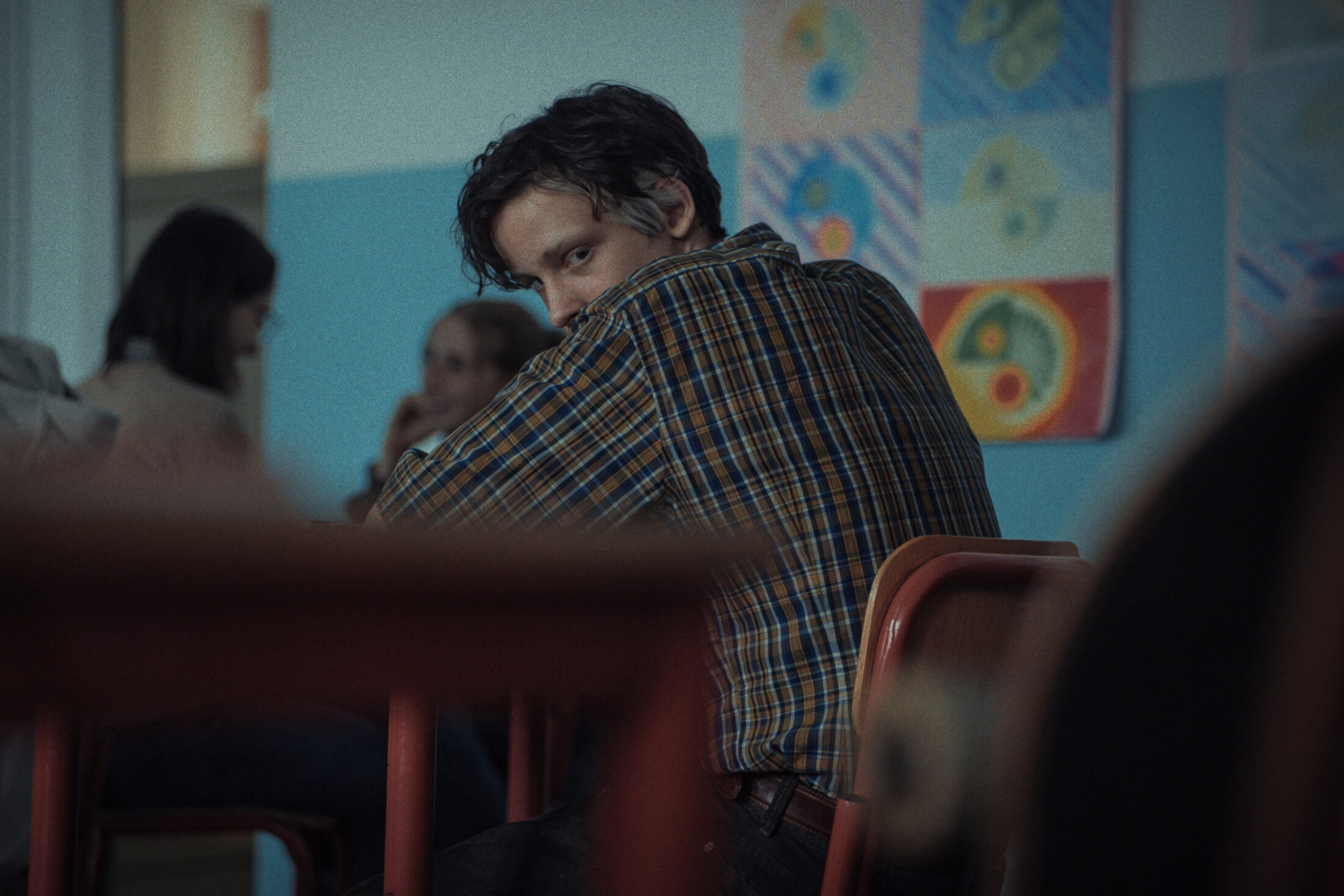
But for all its gruesome imagery and more conventional horror flourishes, The Holy Boy is ultimately a coming-of-age story about a young man desperately attempting to establish an identity outside the expectations imposed upon him by his family and community. Matteo might be celebrated as an angel, a saint or even a divine gift, but beneath all those grandiose titles is an ordinary teenage boy who has never been given the opportunity to discover who he actually is.
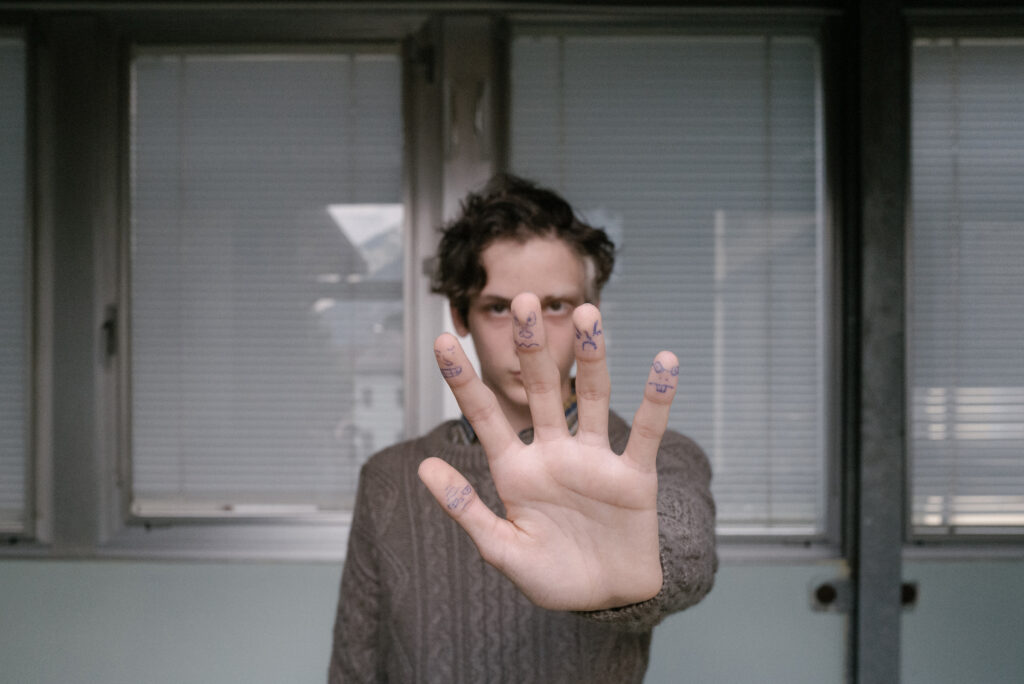
He’s also gay, an aspect of his characterization that becomes increasingly significant as the film progresses, particularly when his attraction to another boy threatens to complicate the role the villagers have assigned to him.
For Strippoli, who is himself queer, the decision to explore Matteo’s identity through the conventions of horror was a deeply personal one, particularly because he wanted to create the sort of character he would have loved to encounter when he was younger.
“I tried to design the Matteo character as a character I wanted to see when I was a kid,” he explains.
It’s a particularly interesting ambition considering the long and complicated relationship between queer audiences and horror cinema, a genre that has frequently provided a space for stories about alienation, repression and the fear of being perceived as different. Even films that aren’t explicitly concerned with sexuality have often resonated with queer audiences because of their explorations of otherness, particularly when their protagonists are forced to confront a society that regards their very existence as something abnormal or threatening.
When the conversation turns to Carrie, Brian De Palma’s extraordinary adaptation of Stephen King’s novel about a sheltered teenager whose supernatural abilities become increasingly dangerous as she struggles with religious repression and relentless bullying, Strippoli is quick to point out that the film has always struck him as inherently queer.
“I think Carrie is also a queer film, even though it doesn’t include homosexuality,” he says. “The spectrum of queerness is much wider than the sexuality of characters.”
It’s a sentiment that also informs his approach to Matteo, whose queerness is expressed not simply through his attraction to another boy but through his increasingly desperate attempts to free himself from the expectations of the people around him.
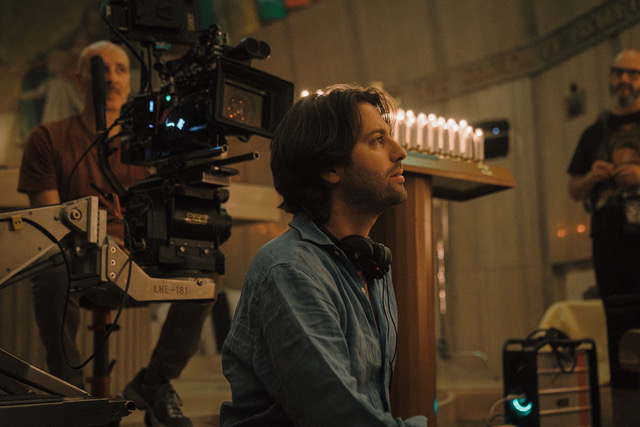
“Matteo is a queer character, and not only because he’s a homosexual character,” Strippoli explains.
“His homosexuality is never problematized because Matteo has many problems in his life. He is gay, but that’s not a problem.”
It’s an important distinction, particularly considering how frequently queer characters in films have been defined by their experiences of rejection, persecution or the shame associated with their sexuality. Strippoli is far more interested in exploring how Matteo’s identity has been suppressed by a community that refuses to recognize him as anything other than the miracle they believe him to be.
“His queerness is not only the person he loves, but also the way he tries to find himself and the way he tries to shape his own identity in a world that doesn’t want him to find his own identity,” he explains.
“Everyone puts a role on him. The role of a saint, of an angel, of the holy boy. And he’s just a teenage boy who is trying to find himself.”
That distinction becomes increasingly important as Matteo begins to challenge the authority of the people who have controlled practically every aspect of his existence. The villagers might genuinely believe that they’re protecting him, but their affection is ultimately conditional on his willingness to continue sacrificing his own happiness for theirs. The moment he begins to express desires that conflict with their expectations, their seemingly unconditional love reveals itself to be something considerably more sinister.
And although Matteo initially appears to be the film’s most sympathetic character, Strippoli has no intention of allowing him to remain a conventional victim. As the pressures surrounding him continue to intensify, the teenager’s growing frustration eventually manifests itself in increasingly disturbing ways, with Feltri delivering a phenomenal performance that charts his transformation from a withdrawn, vulnerable young boy into something far more unpredictable.
It’s a remarkable debut from the young actor, who brings an extraordinary amount of sensitivity to a character whose emotional development becomes increasingly difficult to reconcile with his actions. There’s something particularly affecting about the way Feltri portrays Matteo’s discomfort during the villagers’ weekly rituals, with his withdrawn body language and almost complete lack of response communicating considerably more than any dialogue could.
But as the film progresses, that vulnerability gradually gives way to an anger that has clearly been building for years, with Strippoli allowing Matteo to become both a sympathetic victim and an increasingly terrifying presence.
“I wanted him to be the main character and the hero of this movie, and also the antagonist of this movie, the villain,” Strippoli reveals.
It’s a bold decision, particularly because the film never attempts to excuse Matteo’s more disturbing behavior simply because of the circumstances that have shaped him. Instead, Strippoli is interested in examining how people can become capable of cruelty when they’re denied the opportunity to express themselves freely, rejecting the idea that good and evil are necessarily fixed characteristics.
“I really don’t believe in the concepts of good and evil,” he explains. “I think there is a really thin line separating good and evil, and villains, most of the time, are the first victims of themselves and the victims of the environment and the society that surrounds them.”
For Strippoli, Matteo’s eventual transformation is an extreme manifestation of something that can occur when young people are prevented from developing their own identities, particularly during adolescence, when the desire for independence and self-expression is often at its strongest.
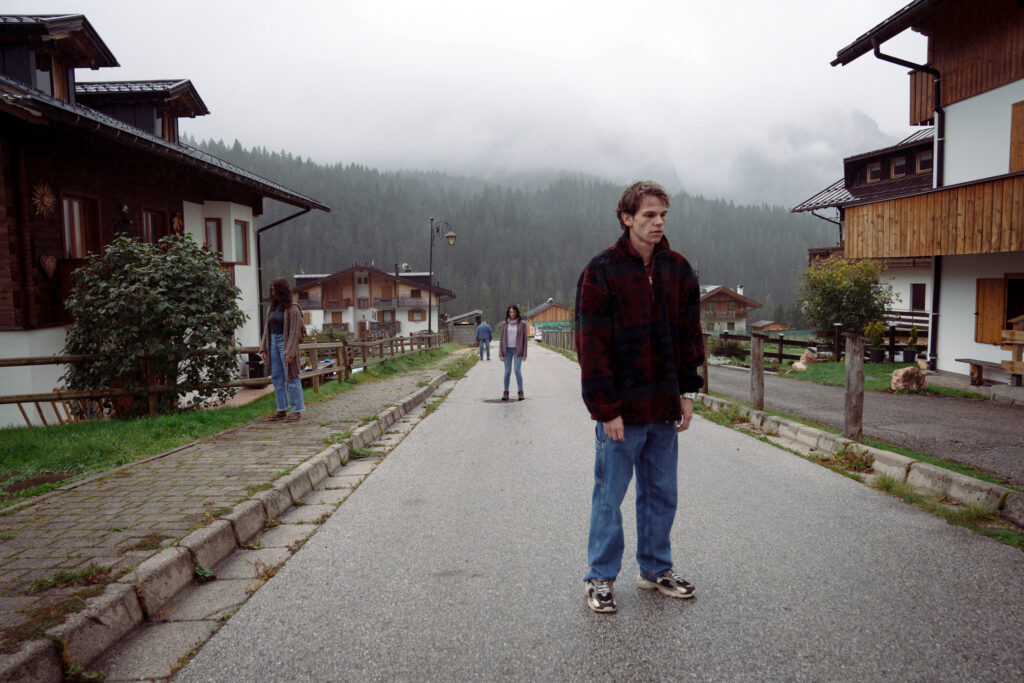
“If someone cannot express themselves fully, especially when they are teenage characters, eventually they explode,” he says.
It’s a particularly compelling interpretation of the character, and one that also helps explain why the film’s exploration of queerness feels so refreshing. Matteo’s sexuality is never presented as something inherently destructive or shameful. Rather, it’s the inability of the people around him to accept that he might want something different from what they’ve envisioned that becomes the source of his suffering.
“Queerness is never a source of pain,” Strippoli insists. “It’s a way of being. It’s part of your identity.”
But when that identity is denied or suppressed, the consequences can be devastating, particularly for someone who has spent much of his life being treated as little more than an extension of other people’s needs.
“If your identity is forbidden by someone else, that becomes something scary,” he continues. “Not only for those who live that, but also for the others.”
The filmmaker compares the process to a plant that has been prevented from growing naturally, gradually becoming distorted because it hasn’t been given the freedom or space required to develop.
It’s an especially effective analogy considering Matteo’s circumstances. He isn’t simply struggling with the expectations placed upon him as a queer teenager, but with an entire community that has made its continued happiness dependent on his willingness to remain exactly as they want him to be.
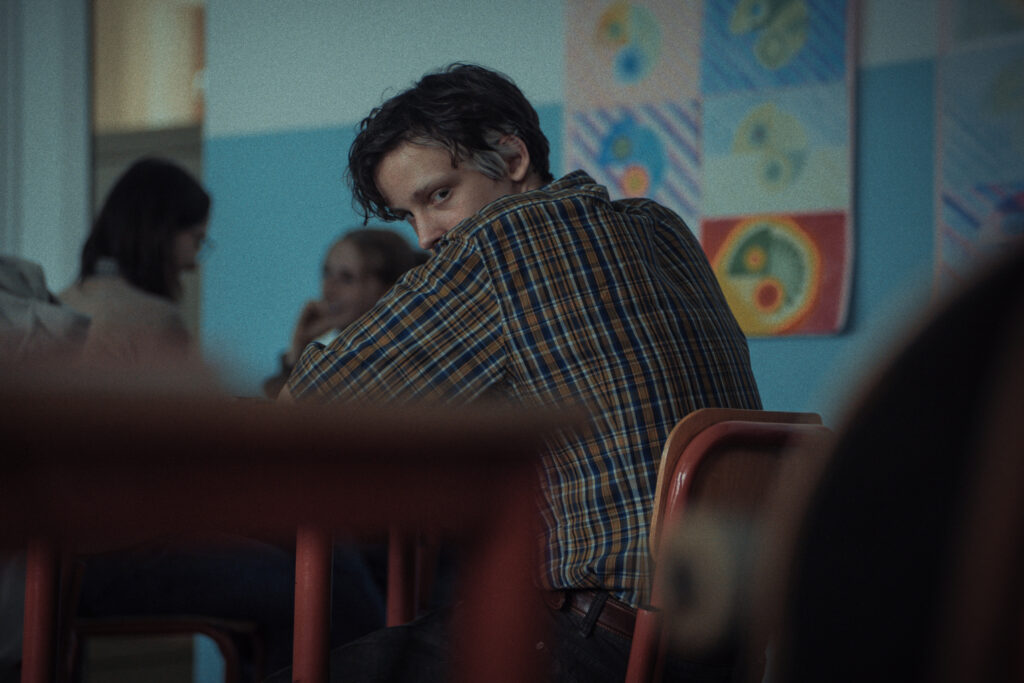
And while religion plays an important role in the villagers’ understanding of Matteo’s abilities, Strippoli is careful to distinguish between faith itself and the ways in which people exploit religious beliefs to justify their behavior.
“Religion is never the enemy,” he explains. “I really admire people who fully believe in something.”
Although he doesn’t personally identify with organized religion or its associated dogmas, the filmmaker is particularly interested in the ways religious language and imagery can be used to legitimize actions that might otherwise be recognized as harmful.
“People sometimes use religion to control other people. People sometimes use religion to justify horrible behaviors and exploitation over other people.”
It’s an observation that becomes increasingly relevant throughout The Holy Boy, particularly as the villagers attempt to explain Matteo’s extraordinary abilities through their own understanding of the divine. Some believe that he’s an angel sent from heaven, while others interpret his existence as something considerably more sinister. Pichler (Sergio Romano), for instance, believes that Matteo is the Antichrist, an interpretation that stands in direct opposition to the almost worshipful devotion exhibited by the rest of the village.
But what makes the situation so disturbing is that nobody appears particularly interested in understanding Matteo himself. They’re far too preoccupied with what he might represent, and what his existence might mean for their own lives.
“These people, they are not really religious. They don’t really believe in anything,” Strippoli says of the villagers. “They justify their exploitation of this young boy.”
“They use this boy to erase their pain, and they scream to the world that they are entitled to do that because he’s an angel sent from above.”
It’s a particularly harsh assessment, but one that makes sense when considering the enormous lengths the community is willing to go to preserve its collective happiness. Convinced that Matteo has been sent to them for a divine purpose, the villagers have effectively absolved themselves of any responsibility for his suffering, transforming what should be an obviously abusive arrangement into something they regard as an act of religious devotion.
And because their happiness depends on maintaining that belief, acknowledging Matteo’s humanity would mean confronting the possibility that they’ve spent years exploiting an innocent child.
“The whole point of the movie is nobody really knows what Matteo is, where Matteo comes from,” Strippoli explains.
But Sergio, despite being far from a conventional hero himself, eventually comes to recognize something that the villagers seem incapable of accepting.
“Matteo is only a child. He’s a kid trying to find himself,” Strippoli says.
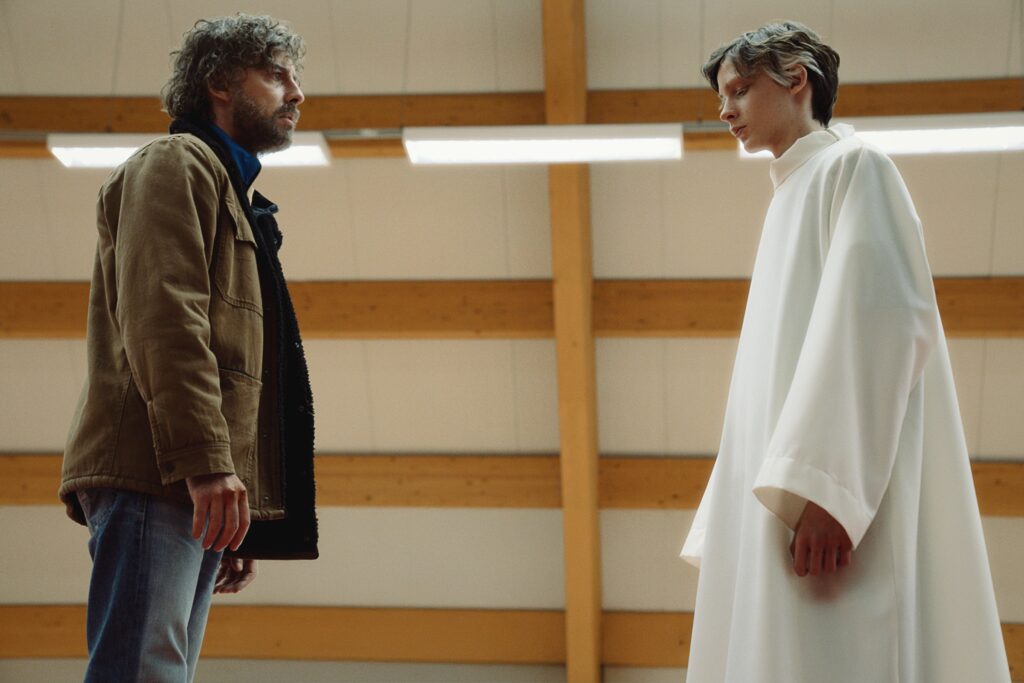
“And this is something nobody can accept because they need to believe he’s something else. If they see him only as a boy, they are not allowed to do what they do anymore.”
Sergio’s relationship with Matteo is one of the film’s most interesting elements, particularly because Strippoli resists the temptation to portray him as a straightforward savior. A former judo practitioner who has been left emotionally devastated by a personal tragedy, Sergio initially appears to be the only person in Remis willing to recognize Matteo’s suffering and challenge the community’s treatment of him. But his determination to protect the teenager is complicated by his own unresolved grief, with his growing attachment to Matteo gradually revealing itself to be motivated by more than simple concern.
Riondino is excellent in the role, bringing considerable emotional weight to a character whose attempts to help Matteo are frequently undermined by his own shortcomings. There’s a deeply sympathetic quality to Sergio, particularly when considering the circumstances that have brought him to Remis, but he’s also a deeply flawed man whose desire to protect the boy becomes increasingly difficult to separate from his need to restore something that has been missing from his own life.
One of the more intriguing details about Sergio is his background in judo, a discipline that requires enormous physical control and a careful understanding of both one’s own movements and those of an opponent. Given how deliberately Strippoli approaches the film’s imagery and characterization, the decision to make Sergio a judo instructor feels particularly significant.
And as it turns out, it is.
“Judo is about self-control,” Strippoli explains. “In a way, he’s a master of self-control for the martial art he practices and he teaches.”
But while Sergio might understand the importance of discipline in a physical sense, he struggles considerably more when attempting to apply those same principles to his emotional life.
“When it comes to teaching self-control to Matteo, he fails,” Strippoli reveals.
The filmmaker believes that Sergio’s failure stems from his inability to recognize the extent to which his own emotional needs have begun to influence his relationship with the teenager, with his desire to protect Matteo gradually becoming entangled with his longing to experience fatherhood again.
“He exploits Matteo too,” Strippoli explains. “Not in the way the community does, but just using him as some kind of son, to be a father again, to restore his role as a father.”
It’s a fascinating contradiction, particularly because Sergio possesses many of the qualities that could genuinely help Matteo develop a healthier understanding of himself. His experience as a teacher should make him ideally suited to guiding a young man who is struggling to establish a sense of independence, but his personal circumstances ultimately prevent him from offering the kind of support Matteo actually needs.
“Even though he has the key to teach Matteo to live, he doesn’t,” Strippoli says.
Instead, Sergio becomes another adult whose understanding of the teenager is shaped by what he hopes to gain from their relationship, even if his intentions are considerably more sympathetic than those of the villagers.
“What he wants first and foremost is to entitle himself to be a father and to be loved by Matteo.”
It’s one of the film’s more effective observations about the complicated nature of affection, particularly when considering that even genuinely loving relationships can become destructive when one person begins to prioritize their own emotional needs over those of someone they’re attempting to protect.
And that brings the conversation back to the film’s most unsettling recurring image: the embrace.
As the villagers gather around Matteo, each hoping to relieve themselves of their suffering, there’s something increasingly grotesque about the sight of these grown men and women wrapping their arms around a young boy who clearly has no interest in returning their affection. Despite the tenderness with which they approach him, their actions begin to resemble a form of physical imprisonment, with Matteo’s body becoming little more than a tool through which they can satisfy their own needs.
For Strippoli, the decision to have the villagers embrace Matteo without him reciprocating was entirely deliberate, particularly because he wanted to expose the uncomfortable relationship between affection, entitlement and control.
“They think they are doing something tender, they are doing something godly,” he explains. “But at the end of the day, they are abusing a young kid.”
It’s a particularly disturbing idea, made all the more effective by the fact that hugging is generally regarded as an inherently positive gesture. There are few things more universally associated with warmth, affection and reassurance, yet Strippoli manages to transform something so ordinary into one of the film’s most unsettling images.
And while the film’s supernatural elements might initially encourage audiences to regard Matteo as something other than human, it’s precisely his humanity that makes these sequences so difficult to watch. He’s a teenager who has never been given the opportunity to establish boundaries, whose body is treated as communal property and whose attempts to express his own desires are met with resistance from the very people who claim to love him.
For Strippoli, the image of the villagers embracing Matteo was the ideal way to communicate the uncomfortable contradictions at the heart of their relationship.
“It was a perfect symbol, a perfect gesture that could embody the duplicity and the ambiguity of what this community does to Matteo.”
It’s an inspired piece of filmmaking, and one that encapsulates why The Holy Boy is such an exciting addition to contemporary horror cinema. Strippoli clearly understands the genre’s ability to communicate complicated emotional and social experiences through the most disturbing imagery imaginable, using supernatural horror to explore questions about identity, grief and the often destructive nature of supposedly unconditional love.
The film premiered out of competition at the 2025 Venice Film Festival, where it received the FEDIC Award for Best Feature Film, before continuing its international festival run and earning further recognition at Fantastic Fest, including the Next Wave Best Director and Audience Awards.
But The Holy Boy is hardly Strippoli’s only major achievement of the past year. His latest film, The Spiral (L’estranea), premiered in competition at the 2026 Venice Film Festival and has since been selected as Italy’s official submission for Best International Feature Film at the 2027 Academy Awards, further establishing the young filmmaker as one of the most exciting voices working in contemporary Italian genre cinema.
Having developed The Holy Boy over several years before finally bringing it to the screen, Strippoli found himself in the unusual position of completing and promoting two major films in relatively quick succession. Both projects have received considerable attention on the international festival circuit, offering the director an opportunity to introduce his work to audiences far beyond his native Italy.
For Strippoli, however, the most rewarding aspect of the experience has been the conversations that his films have inspired, particularly with viewers who have found something of their own experiences reflected in his work.
“When I make a movie, I try to make something that really speaks to me and that I’m obsessed with,” he explains. “I don’t expect anything.”
Although he naturally hopes that audiences will connect with the stories he chooses to tell, the filmmaker is reluctant to approach his work with any particular expectations, preferring instead to focus on creating films that genuinely reflect his own interests and concerns.
“Of course, I hope that my stories, my films, can connect to other people. When it happens, it’s magic.”
It’s a sentiment that feels especially appropriate considering the intensely personal nature of The Holy Boy, a film that explores queer identity and the desire for acceptance through a story that is as emotionally affecting as it is profoundly disturbing. For Strippoli, the opportunity to hear from people who recognize something of themselves in Matteo’s experiences is among the greatest rewards of making films.
“This is the best thing about movies,” he says. “They become a common ground to start conversations and to share experiences.”
And with his increasingly ambitious work continuing to attract attention from audiences around the world, those conversations appear unlikely to stop anytime soon.
“It feeds my knowledge of the world, my knowledge of human beings, and also my creativity,” Strippoli explains. “It keeps me going. It keeps me wanting to do this job.”
THE HOLY BOY premieres on Shudder on November 27, 2026.